


In the rapidly evolving mobile-first economy, enterprises—from global app developers to e-commerce marketing aggregators—face a common operational bottleneck: managing physical mobile hardware at scale. While emulators provide a baseline for logic development, they fail to replicate the real-world hardware nuances such as sensor variance, kernel-level thermal throttling, and actual carrier-specific network behavior. This is where the Cell Phone Farm—specifically the professional Phone Farm Box—becomes a critical infrastructure asset. It is an integrated system designed to organize, power, and manage multiple real devices from a single control interface with industrial-grade reliability.
I. What Is a Cell Phone Farm? Deconstructing the 4 Pillars
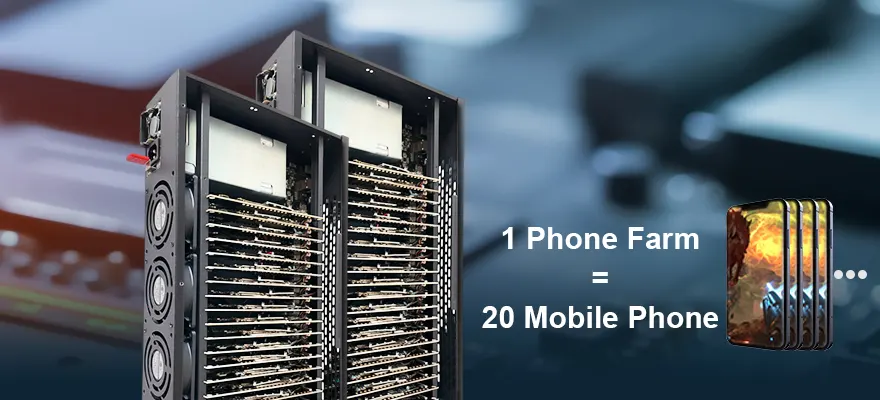
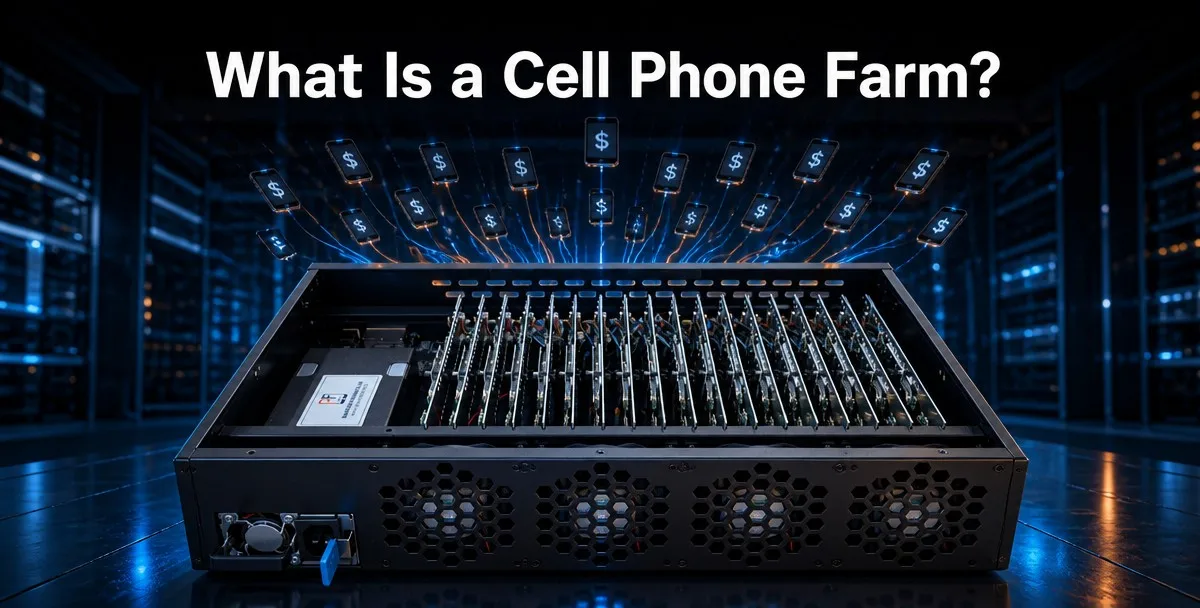
A professional cell phone farm is far more than a collection of phones on a shelf. It is a high-density compute environment that synchronizes four key engineering pillars to ensure 100% device uptime during massive parallel tasks.
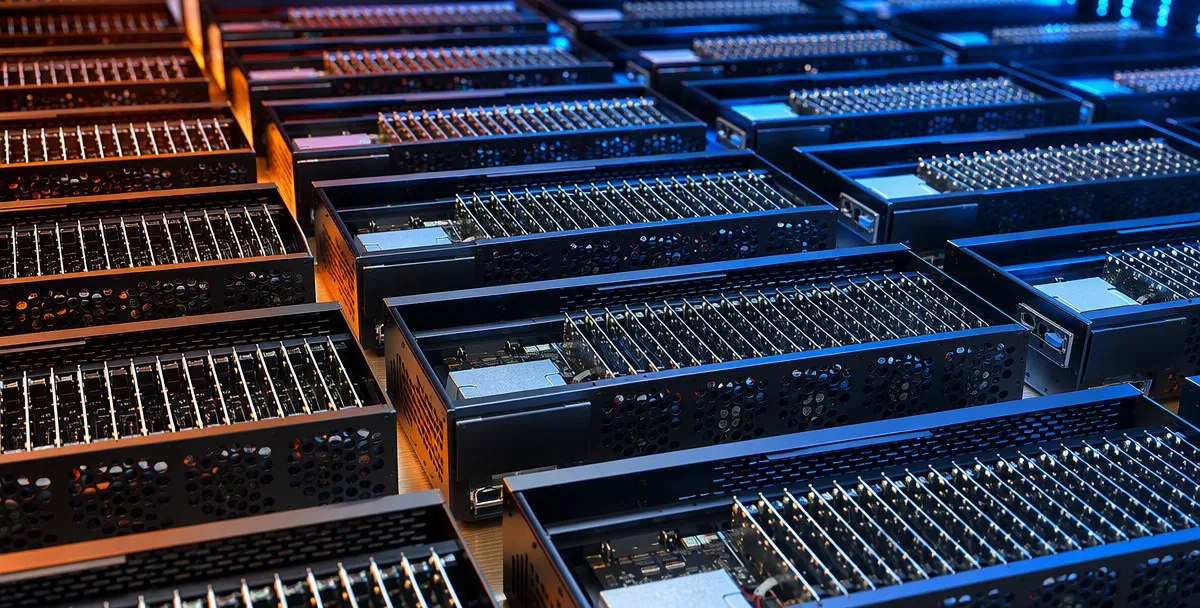
- Physical Device Nodes: Professional farms often utilize high-density SoC (System on Chip) boards. These “battery-free” mobile nodes eliminate fire hazards and bloating, focusing purely on compute performance.
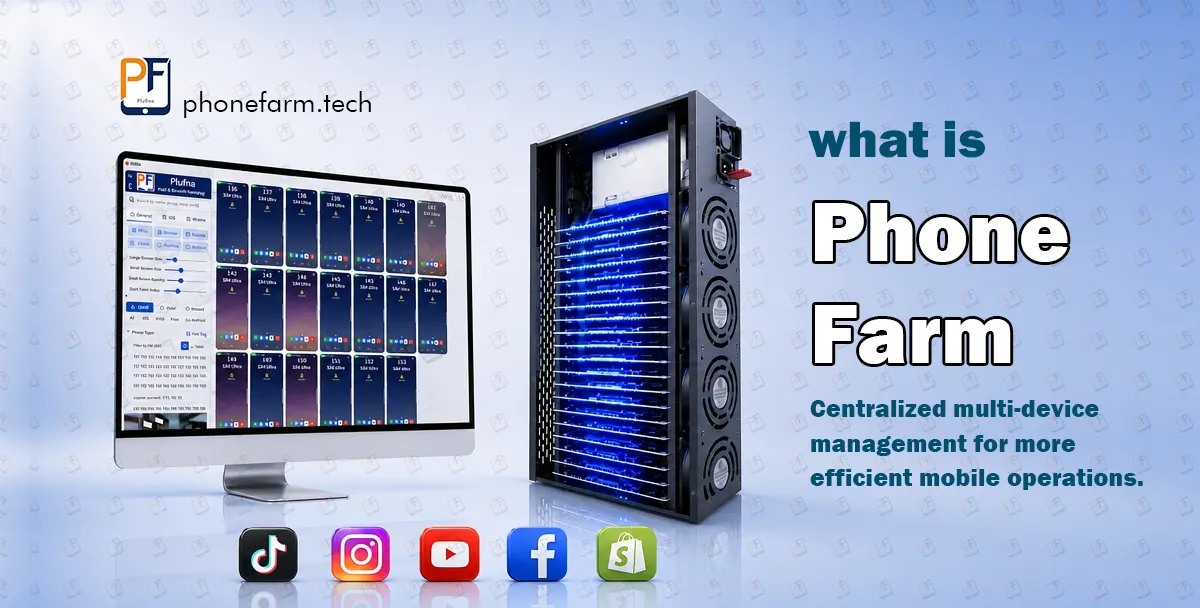
- Control Software (Plufina): The “brain” of the operation. Plufina provides an optimized ADB (Android Debug Bridge) stack for low-latency synchronization across hundreds of nodes.
- Power Integrity Network: Specialized constant-current DC power units provide stable voltage to every node, preventing the “Silent Disconnects” common in DIY USB hubs during peak data loads.
- Data Backplane: A high-speed USB 3.0 infrastructure that handles the massive multi-channel bandwidth required for real-time screen mirroring without dropping frames.
II. How Does a Multi-Device Phone System Work?
The workflow of a professional phone farm is a study in batch orchestration and latency optimization. Instead of human operators interacting with individual devices, the system funnels all operations through a central Plufina workstation.
1. Centralized Group Orchestration
Using the Plufina interface, an operator can execute a click, swipe, or text-input on a single “Master” device and witness it replicated instantly across 50, 100, or more devices. This synchronized interaction reduces repetitive labor by over 95%.
2. Low-Latency Visual Monitoring
High-performance hardware encoders stream the displays of all connected devices to a grid view on the operator’s monitor. This allows for real-time visual health checks and immediate identification of UI bugs or application crashes across the entire fleet.
3. Bulk Deployment & File Management
Deploying application updates or pushing media assets is no longer a one-by-one task. Engineers can push APK files to specific device groups simultaneously, slashing release deployment cycles from hours to seconds.
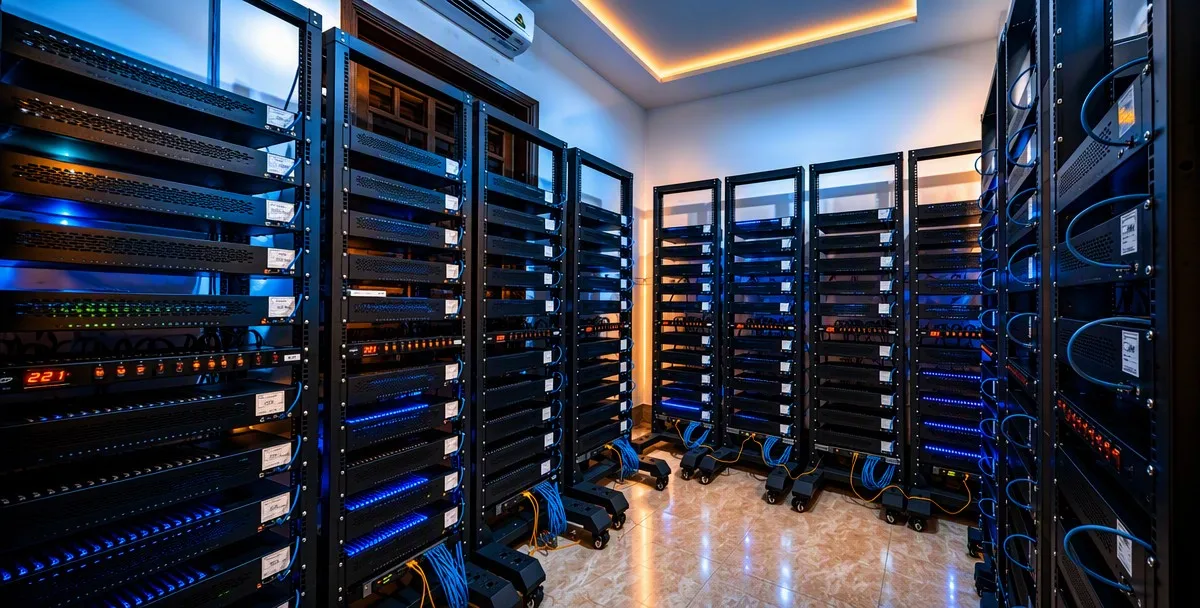
III. Common Legitimate B2B Use Cases
For B2B organizations, the ROI of a professional phone farm is driven by the need for real-device fidelity which cannot be simulated by software emulators.
- Mobile App Testing: QA teams run automated test suites (Appium, Selenium) on real hardware to identify device-specific kernel hangs and SoC-specific artifacts.
- Customer Support Reproduction: Support agents can instantly access a physical device matching a user’s exact model and OS version to reproduce and troubleshoot reported bugs.
- Device Demonstration: Sales teams can remotely showcase mobile software to global clients using physical hardware located in a high-speed central lab.
- Managed Content Operations: Marketing aggregators use these clusters to verify localized content rendering and layout consistency across a massive range of real mobile viewports.
IV. Cell Phone Farm vs. DIY Phone Rack vs. Emulator
Choosing the right environment depends on your required accuracy and the cost of engineering time.
| Metric | Android Emulator | DIY Phone Rack | Professional PhoneFarm Box |
|---|---|---|---|
| Hardware Fidelity | Low (Simulated) | High (Phones only) | High (Real Hardware + SoC) |
| Labor Requirement | Low | High (Manual sorting) | Minimal (Software-Driven) |
| Stability (Uptime) | High | Low (Fragile cables) | Industrial-Grade (99.9%) |
| Scalability | High | Difficult to scale | Modular (Plug-and-Scale) |
| MTTR (Repair Time) | Instant | Long (Manual debug) | Rapid (Real-time Alerts) |
V. What to Consider Before Deployment?
Deploying 100+ devices is a significant engineering undertaking. Decision-makers must evaluate five key vectors before selecting a vendor:
- Remote Management: Ensure the system features robust remote-reboot and hardware-level power monitoring to avoid “Zombie Nodes” that require site visits.
- Cooling & Thermal Design: High-density arrays generate immense heat. A professional box must have active fan-speed control and high-CFM airflow.
- Network Architecture: 100+ mirrored screens can saturate a standard LAN. Planning for VLAN segmentation and proxy management is essential.
- OS Compatibility: Confirm that the management software supports your specific Android versions and provides a path for iOS integration if required.
- Service & Support: Industrial hardware requires factory-direct technical support for firmware customization and data backplane maintenance.
VI. PhoneFarm Box Solutions: Engineering the Future
At **PhoneFarm Tech**, we provide factory-direct hardware and the **Plufina RDM platform** tailored for global B2B operations. Our solutions range from compact 20-port desktop units to 100-port rackmount arrays, all including a standard industrial warranty and technical deployment blueprints.
Frequently Asked Questions
Using Plufina and our high-speed backplane, a modern workstation can typically manage 60 to 100 devices simultaneously, depending on the desired mirroring resolution and CPU power.
Yes. Our infrastructure is built for network integration, allowing global QA or support teams to access physical hardware clusters located in secure, high-bandwidth data centers via VPN.
Talk to a Device Management Specialist
Stop wasting engineering resources on manual device handling. A professional cell phone farm brings predictability, visibility, and scalability to your mobile operations. Get your custom hardware blueprint today.
Request a Custom Quote Talk to an Engineer